House Number Numerology: What Your Home Expects from You
In numerology, your house number reveals the vibration of your home: the atmosphere you breathe there, the kind of people it attracts, and what the house expects from the people who live in it. Homes have their own way of being, like people. That's why, when you're looking for one, don't think only about what you want from it, but also about what it asks of you.
Here you'll see how to calculate your house number, what each number from 1 to 9 and the master numbers 11, 22, and 33 mean, and why the most important question isn't what number your house has, but whether that number goes with you.
Calculate my house number free
How to calculate your house number
Add all the digits of your house number and reduce them to a single digit. If the sum is 11, 22, or 33, it's kept, because they're master numbers.
- House 2136: 2 + 1 + 3 + 6 = 12, and 1 + 2 = 3. It's a 3 house.
- Apartment 4B: if you live in an apartment, count your apartment number, not the building's. Letters count too, with their value in the Pythagorean chart (A = 1, B = 2, C = 3…). 4 + 2 = 6. It's a 6 house.
The number is assigned by the city and can't be changed, but that doesn't mean you have to live at odds with it.
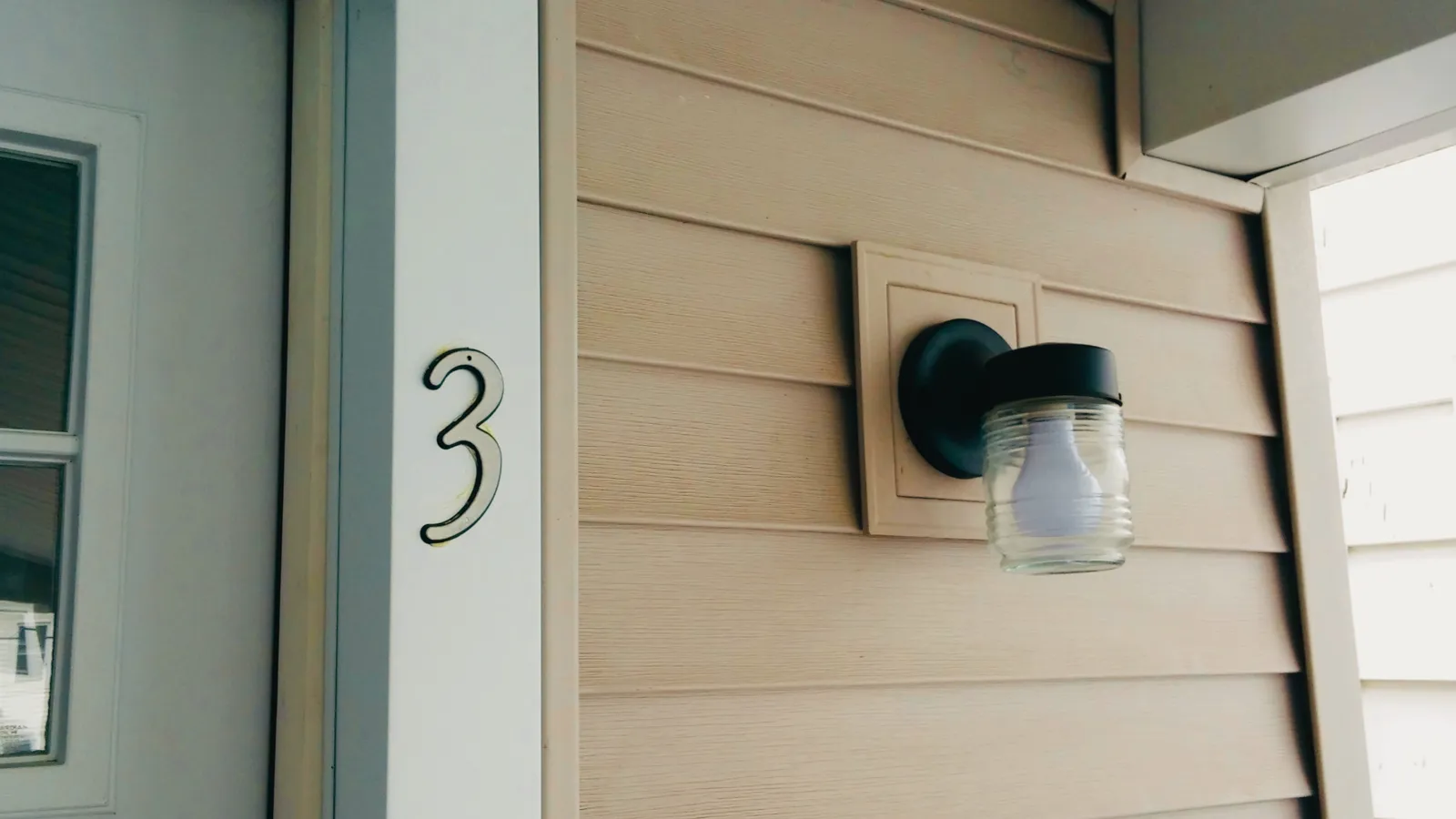
House number meanings from 1 to 9
There are no bad numbers in numerology: each number expresses a different energy, and your house number uniquely influences the atmosphere, experiences, relationships, and well-being of the people who live in it.
House 1. A home for independent people, with initiative and a leader's profile. It encourages individuality, self-expression, and self-sufficiency, and it's worth balancing so it doesn't lead to isolation. It tends to awaken initiative even in people who didn't have it, and it can become an inviting space for projects and guests.
House 2. A calm, simple home for diplomatic, kind people. The energy of the 2 represents harmony, cooperation, union, and sensitivity: it favors agreements, lasting relationships, living together, love, and good relations with the neighbors. Arrogance doesn't fit here.
House 3. A joyful home, ideal for having guests over and for creating, with an energy that favors expression, social life, and connection. It's worth making sure that the love of enjoyment doesn't turn into overspending.
House 4. A home for practical, orderly, hardworking people who know how to manage: stability and steady work carry weight here. If rigidity takes over, tensions can arise in the family.
For example, to feel at ease in it: keep it in order, fix what's pending, and keep a routine.
House 5. A home in motion, for versatile people who come and go all the time. More than a nest, it's a base for action.
House 6. The family home par excellence: a lot of responsibility, but also love, comfort, peace, service, and beauty. It's the most harmonious house for the whole family.
For example, to feel at ease in it: take care of it, beautify it with soft colors or works of art, and make it the family's gathering place.
House 7. A home of stillness, ideal for studying, teaching, resting, and thinking. It's related to spirituality, introspection, and wisdom, although taken to the extreme that energy can isolate you from the world. Loud parties don't go with its energy.
For example, to feel at ease in it: set aside a corner for reading or meditating and protect the quiet.
House 8. A home with an air of importance and success, which can even work as an office. It favors abundance, power, and material success, and it calls for good judgment, practical management, and a sober presence.
House 9. An open-door home for people who want to serve and help, and for those who love the arts. Its energy is generous and tends to attract empathetic people; it's worth living it constructively so it doesn't wear you out.
Houses with a master number: 11, 22, and 33
A master house is read first by the number it carries inside and then by the master number.
- House 11. First, the calm and tact of the 2. Then, a home for sensitive, idealistic people, good for meditating, creating, and guiding others. Its energy is stimulating, so it's worth protecting your rest.
- House 22. First, the order, work, and structure of the 4. Then, a home from which big projects that benefit many are planned. It's worth making sure work doesn't take over all of the family's space.
- House 33. First, the family life of the 6. Then, a home people come to for comfort and advice. It gives a lot of affection, but it asks you to set boundaries so you don't wear yourself out caring for others.
Does your house go with you?
Knowing your house number is only half of it. The other half is you.
Imagine someone with Destiny 5, a person who works from freedom, change, and movement, living in a 4 house, which asks for order, work, and routine. They'll likely feel that the house closes them in, even if they can't explain why. Now imagine that same person in a 5 house: there, they'll likely feel in their element.
That's the question this article can't answer for you:
- Does what your house asks for match who you are (your Destiny Number, also called the Expression Number)?
- Does living there help you with what you're here to learn (your Life Path), or does it hold you back?
- If they don't go together, what number or letter can you place on the inside of the door to add a new vibration to your house and bring it toward your number, without changing the official number?
Your full reading answers all three with your own numbers.
What to do if you don't feel at ease in your house
Don't move right away: first understand what your house asks for and live accordingly, because its energy can influence your relationships and your well-being, and it may be exactly what you need at this stage. Often, giving the house what it needs completely changes how you feel in it. And remember that the house doesn't rule your life: you have your own way of being and your own mission to fulfill. You can also see how compatibility with your partner works, explore the numerology of your date of birth, or read the meaning of numbers.